Maintenance and Ursula Le Guin

I confess, I never liked fantasy or science fiction. As  a child, I was terrorized by fairytales; as an adult, by films like  2001: A Space Odyssey.  Of course, as a high school  English teacher, I taught Le Guin. Kids love it. It wasn’t until I moved to Oregon late in life that I realized she is a patron saint around here.
And it wasn’t until recently,  I inadvertently discovered that, like me, as a superannuated adult, Le Guin started keeping a personal journal that she wrote as a blog. Her personal posts were collected and published in a book in 2017, a year before she died in Portland. No Time to Spare — Thinking About What Matters.
In this compendium, she is concerned with a couple of topics that we here my “retirement community” also muse about.
One :  Bodily maintenance.  Le Guin noted that it takes an inordinate amount of time to maintain an old body. I have noticed that too recently!  I alternately embrace it and resent it.  I am grateful that there are meds to regulate my blood pressure, my cholesterol, my heart rate. At the same time, I resent the few minutes I spend on Sunday nights sorting my pills out in those little compartments labeled for each morning and evening for every day of the week. Likewise, I am grateful that I employ several specialists to help me manage this shockingly degenerating body that I inhabit, while being annoyed at the precious time it takes up. I see myself as healthy and strong and active. Yet I have a doctor to manage my arthritis, one to manage my  A-fib, one to contribute fake joints, one to monitor my kidney function, one to mend torn tendons, and one called a PCP, who is sort of like a juggler. They are all nice folks. All brilliant. And all about 12 years old.
Two:  At our age, we have no time to waste.   Le Guin wrote that she really doesn’t recognize the concept of “spare time” because all her time was occupied, not wasted —  perhaps by daydreaming,  or doing business, or reading, writing, thinking, filling her bird feeders, staring out her window.  She was occupied by living.  At my age, I have no time to spare.

Expressions I Didn’t Know as a Girl and Wish I Still Didn’t


trouble shooting
bandwidth
greenwashing
fugue state
hydrate
gifted (as a verb)
liaise
feminism
macho
gal (referring to an adult woman)
safe sex
downsizing
fat free
sugar free
gluten free
screen time
parenting
bonding (in reference to relationships)
problem solving
influencer
carbs
senior citizen
retirement community
user name
wedding venue
mammogram
tachycardia
decaffeinated
cholesterol
colonoscopy
leaf blower
fake news
talk show
pedicure
celulite
f _ _ _ (Which as far as I can tell actually means nothing any more anyway)

Jesus, remember me?

Sometimes I find myself trying to explain to someone why I am a practicing Episcopalian but not a believing one. Actually, I think I often try to explain it to myself.  Having lost the child-like faith of my childhood, I feel what Jean-Paul Sartre, an atheist existentialist philosopher, ireferred to as a  “God-shaped hole”. The phrase is used to describe the emptiness left behind when the divine disappears from human consciousness.

Recently, I came across an article in the NY Times that explains my behavior better than I have ever been able to.   Here is it:

CAN I GO TO CHURCH WHEN I DON’T BELIEVE?

I grew up in the Catholic tradition, but after obtaining several university degrees — including one in religion — it became clear to me that Jesus wasn’t divine and that the cobbling together of the Bible in the fourth century was a consummate work of spin-doctoring. I have about 20 arguments in defense of this, not the least of which is Christ’s inefficacy. After 2,000 years, his followers have split into thousands of sects, many of whom have shot and killed members of rival sects. Think of Northern Ireland, World War II. It doesn’t seem to me the way an omnipotent deity should operate.

But boy, oh, boy, do I love the artistic output of Christianity. Bach’s B-minor Mass, the Fauré Requiem, St. Paul’s Cathedral — all these lift my spirit. I love a beautiful Christian service.(Where else do you hear an organ like that?) Actors talk about ‘‘working from the outside in,’’ in which a physical position unlocks inner emotions. For me, kneeling does this. I don’t pray, but the act creates humility and gratitude. It does me good. Then there’s the lovely sense of community in a congregation.

I’ll never be converted. So I guess I’m lying when I turn up at a service and recite the Creed and sing the hymns as lustily as anyone else. Am I hurting anyone by doing this? Is it, for want of a better word, a sin? — Name Withheld

Make your Bed!


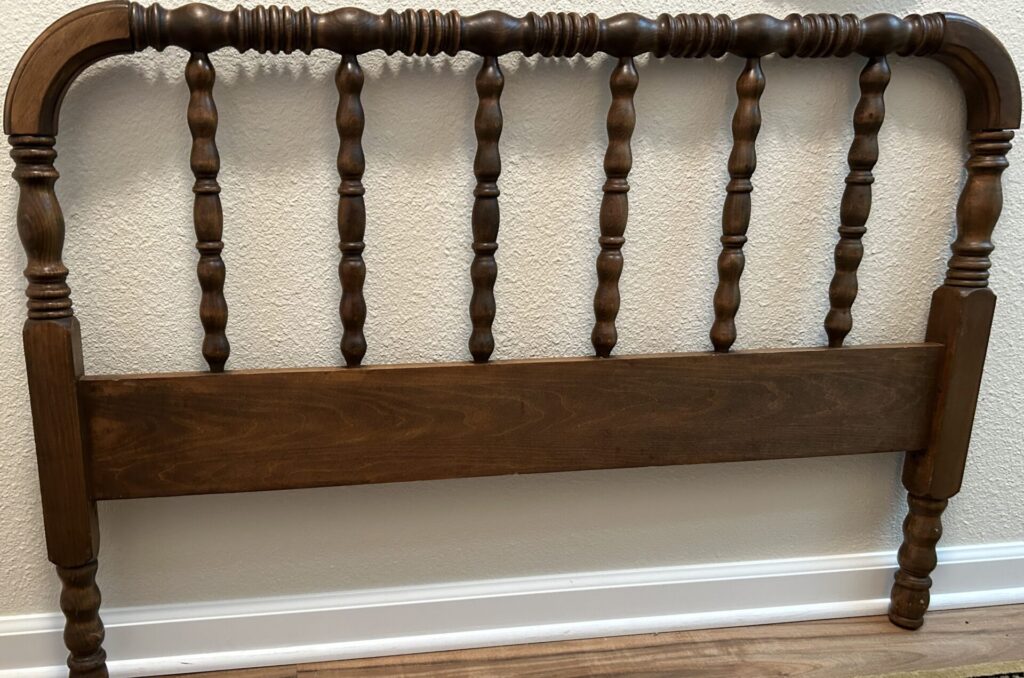
We were told to do that as soon as we moved out of a baby crib and into a “big” bed. It was pretty simple: Pull up the sheet. Pull up the blanket. Pull up the chenille bedspread. Fluff up your pillow. Tuck the spread under and over the pillow. Done.


My Childhood Bed

Likewise, we were also admonished to make up our cot at church camp or boot camp. Leaving an unmade bed was considered slovenly or earned us demerits.

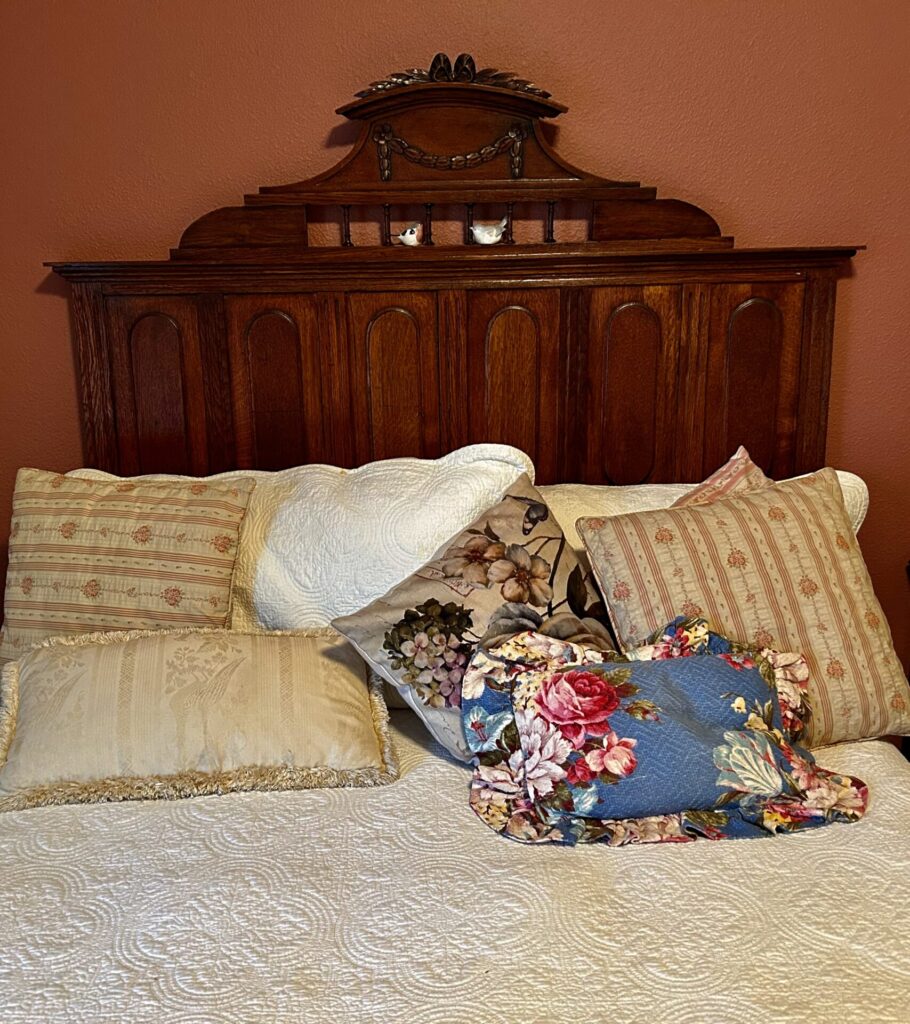
That was then. Now, bed-making is not simple and neither is unmaking. We no longer sleep on or under any of the stuff we “decorate “ the bed with. You would never sleep under or sit on your expensive bedspread. And the pillows we actually sleep on are put aside and replaced by many decorative throw pillows. Maybe as children, we had a small down comforter to sleep under if we were lucky. Now such a thing is called a duvet which is painstakingly inserted into a duvet cover made of some fancy material. This and the sleeping pillows are hidden away all day.

You have made your bed and now you must lie in it — but not so fast!

Il faut admirer les Français


This weekend there is lots of news about the restoration of Notre Dame and its reopening. It is truly amazing. I attended a service there in i970. I was blown away.


Today I was blown away listening to the French artisans being interviewed and using complex English verb tenses. “I believe the original artisans would have wanted. . .” I think that tense is conditional past perfect. Not sure. I’m a native speaker and an old English teacher and I sometimes don’t know whether the conditional or the subjunctive is needed in my mother tongue. So much about the French to admire — food, architecture, fashion, polylingualism.